Plate Girder vs Composite Girder vs Open Web Girder: A Buyer’s Guide
Plate Girder vs Composite Girder vs Open Web Girder: A Buyer’s Guide
Choosing between a plate girder vs composite girder is a design decision first, but the choice also shapes fabrication planning, inspection, transport and procurement. Buyers often use the terms plate girder, composite girder and open web girder interchangeably. They are not interchangeable: each has a different structural arrangement and project context. This guide compares the three forms from a fabrication and buyer’s perspective.
The final selection remains with the project designer, the governing drawings, standards and approval requirements.
Plate Girders
A plate girder is a built-up beam made from steel plates. In fabrication terms, it typically involves web and flange plates, stiffeners and connections, along with the welding, dimensional-control and inspection activities set out in the approved drawings.
Plate girders are often considered where the project needs a robust, straightforward fabricated member with a solid web. Before quoting, a buyer should clarify member length, plate thicknesses, stiffener details, splice locations, welding scope, bearing interfaces, coating system and delivery configuration.
Composite Girders
A composite girder package normally brings the steel girder into a wider system, with the deck or concrete component defined by the project design. The fabrication scope can include shear studs or other interfaces, but only where the approved package specifies them.
For procurement, the key question is where the boundary sits between steel fabrication, supplied fittings, site work and the civil deck package. That boundary affects price, inspection records, packing, delivery sequence and responsibility at handover.
Open Web Girders
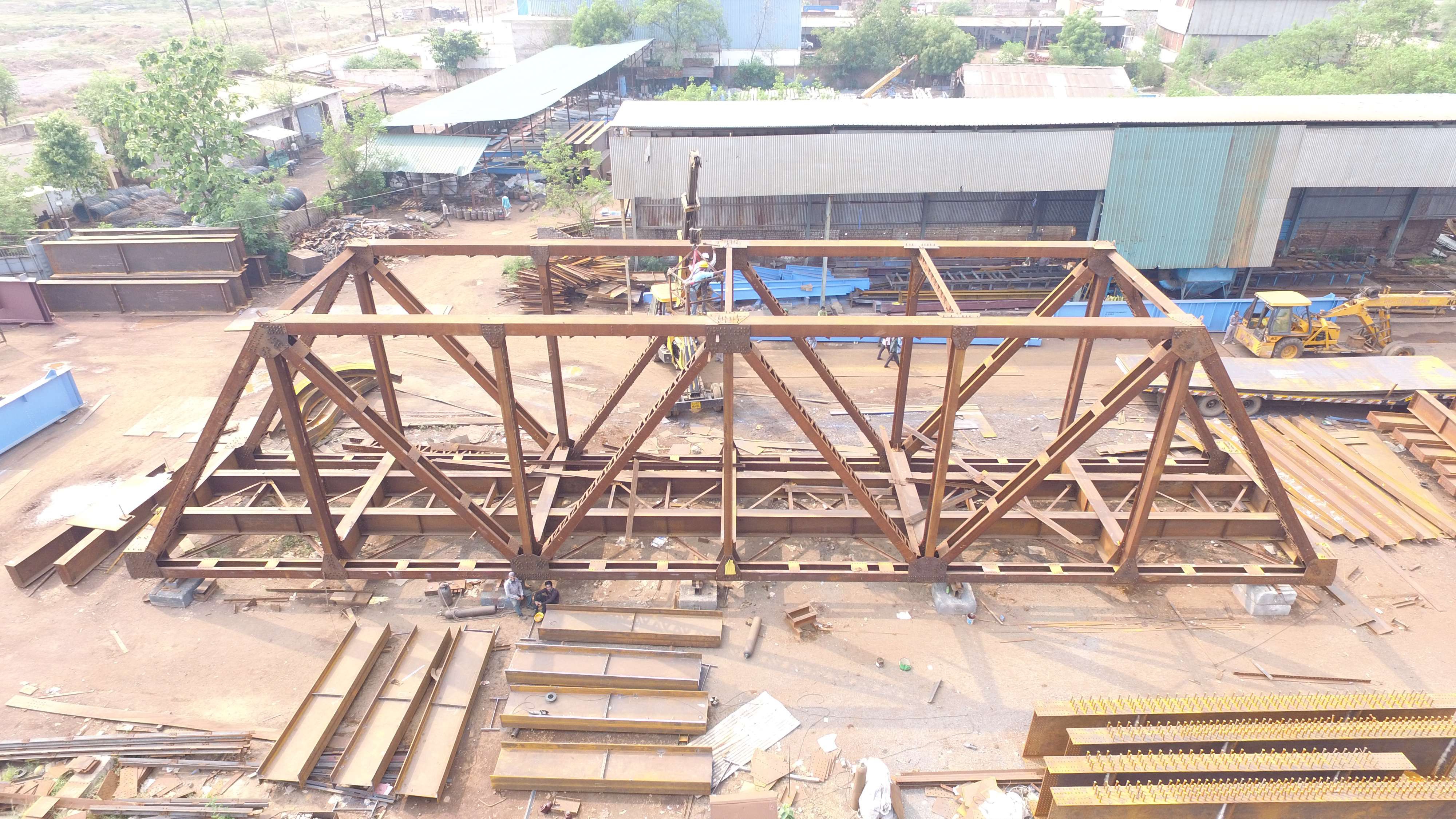
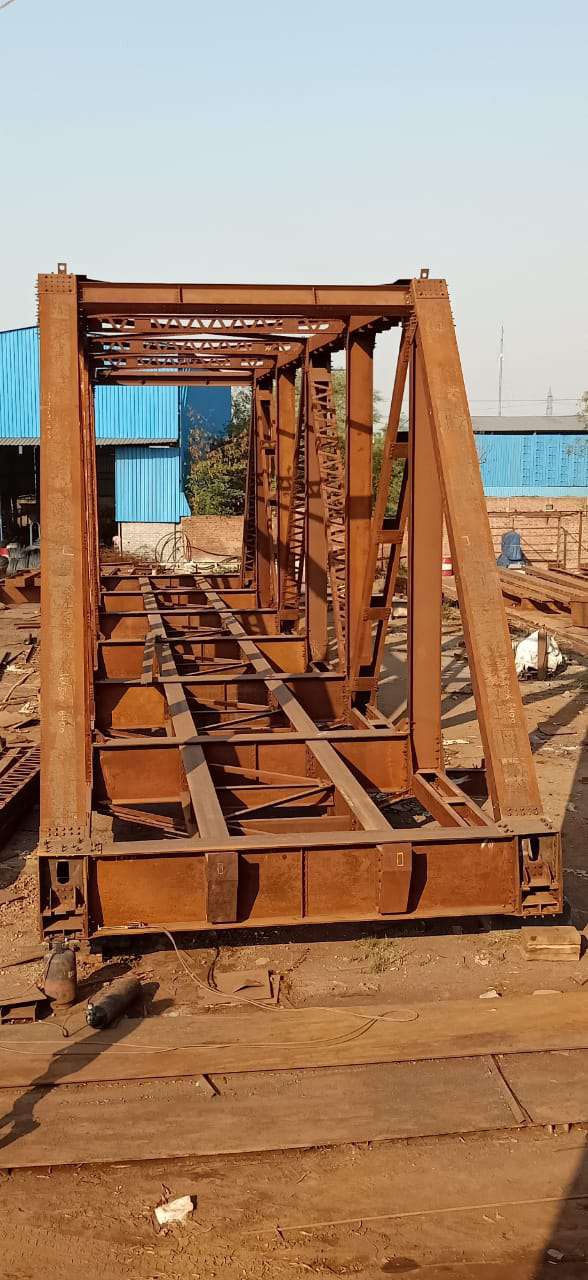
Open web girders use a truss-like arrangement of chords and web members. The open framework changes the fabrication task: member fit-up, gusset or connection details, geometry, trial checks and transport planning must be considered as one complete assembly.
Kothari Chemicals (Engineering Division) has executed open-web girder work for NTPC Lara, described in the example below. That kind of project shows why the fabricator must work from the approved member details and inspection plan rather than a generic girder description.
Comparison at a Glance
| Girder type | Use case | Typical application | Fabrication considerations | Inspection focus |
|---|---|---|---|---|
| Plate girder | A solid-web, built-up member is specified | Road and railway bridge members where the designer calls for a robust, straightforward steel section | Web and flange plates, stiffeners, splice locations, welding sequence, bearing interfaces | Weld and dimensional checks on plates, stiffeners and splices; coating inspection |
| Composite girder | The steel girder works within a deck system defined by the designer | Bridge spans where the steel-to-deck interface and supplied fittings are part of the package | Interface details such as studs where specified, supply boundary, packing and sequence | Stud and interface details against the drawing; records and handover boundary |
| Open web girder | A truss-type framework is specified | Railway and road bridge members where the designer selects an open framework | Chord and web member fit-up, connection details, geometry, trial assembly, transport | Connection and rivet details where specified; geometry and trial-assembly checks |
The table gives qualitative summaries only. The designer’s basis of design and the inspection and test plan decide the actual scope.
Questions to Resolve Before Requesting a Quote
- What girder type is specified on the latest drawing revision?
- What spans, member quantities and delivery configuration apply?
- Are studs, fittings, bearings, coating or metalizing included?
- Which governing codes, inspection and NDT requirements apply?
- Does the quoted scope end at shop dispatch or include delivery to site?
Example: NTPC Lara Open-Web Girders
Kothari Chemicals (Engineering Division) fabricated ten 30.5 m open-web girder spans, including rivets, for the NTPC Lara project. The recorded quantity is 250 MT.
The record shows how span count, girder form and included fittings are stated for an open-web package. A comparable package still needs its own drawings, quantities and inspection plan. The published NTPC Lara case study gives the reference record.
Frequently Asked Questions
Is a plate girder the same as a composite girder?
No. A plate girder is a built-up steel member with a solid web. A composite girder is a steel girder that works within a wider system with the deck or concrete component defined by the project design. Check the latest drawing to confirm which form is specified.
How is an open web girder different from a plate girder?
A plate girder is a built-up, solid-web member. An open web girder uses chords and web members in a truss-like arrangement, so fit-up, connection details, geometry and transport planning must be treated as one assembly.
Does Kothari Chemicals (Engineering Division) design the girders it fabricates?
Design responsibility is defined package by package. The standard workflow includes design and drawing review for manufacturability, but this does not automatically make Kothari Chemicals the engineer of record.
What should a girder RFQ include?
Provide the latest drawings and revision register, bill of quantities, material grades, governing codes, welding and NDT requirements, inspection authority, coating specification, trial-assembly requirements, delivery location and dispatch splits. These details make quotations comparable and reduce assumptions.
Choosing the Right Partner
The right girder is the one specified for the project. The right fabrication partner is one that can turn that requirement into a clear production, inspection and dispatch plan. Kothari Chemicals (Engineering Division) reviews drawings for manufacturability before release; see the girder bridge fabrication services and the RDSO-approved bridge fabrication page.
For related reading, see trial assembly, camber and dimensional control, the steel fabrication RFQ checklist, long steel girder transport and dispatch planning and how to verify RDSO vendor registration for a girder tender.
About Engineering Team
The Engineering Team at Kothari Chemicals Engineering Division brings decades of combined experience in steel fabrication, quality assurance, and project management. We're committed to sharing knowledge that helps our industry grow.